Choosing a school is one of the most important decisions a parent can make. Beyond academic performance, today’s schools need to prepare learners for a world that is increasingly digital, collaborative and constantly changing.
A modern school should provide more than classrooms and textbooks. It should create an environment where learners can learn, communicate, develop important skills and prepare for the future.
So, what should parents look for when choosing a modern school?
Quick answer: When choosing a modern school in Kenya, parents should look for five things: a strong learning environment with qualified teachers, meaningful use of technology, regular communication between the school and parents, a safe and supportive environment, and preparation for the future through Competency Based Education (CBE) skills such as critical thinking, creativity and digital literacy.
Here are five important things to consider.
1. A Strong Learning Environment
Academic excellence remains important, but parents should look beyond examination results.
A good school should provide:
- Qualified and committed teachers
- A supportive learning environment
- Appropriate learning resources
- Practical and interactive learning opportunities
- Support for learners with different learning needs
Parents should ask about the school’s teaching methods and how teachers support learners who may need additional assistance.
The goal should not simply be to help students pass exams. A modern school should help learners understand, apply and enjoy what they learn.
2. Use of Technology in Education
Technology is becoming an increasingly important part of modern education.
Parents should consider whether a school is using technology meaningfully to support teaching and learning.
This may include:
- Digital learning resources
- Online learning platforms
- Digital assignments
- Educational applications
- Digital communication
- Online access to learning materials
Technology should not replace teachers. Instead, it should support teachers and improve the learning experience.
Digital learning can also help learners develop technology skills that will be valuable in higher education and the workplace.
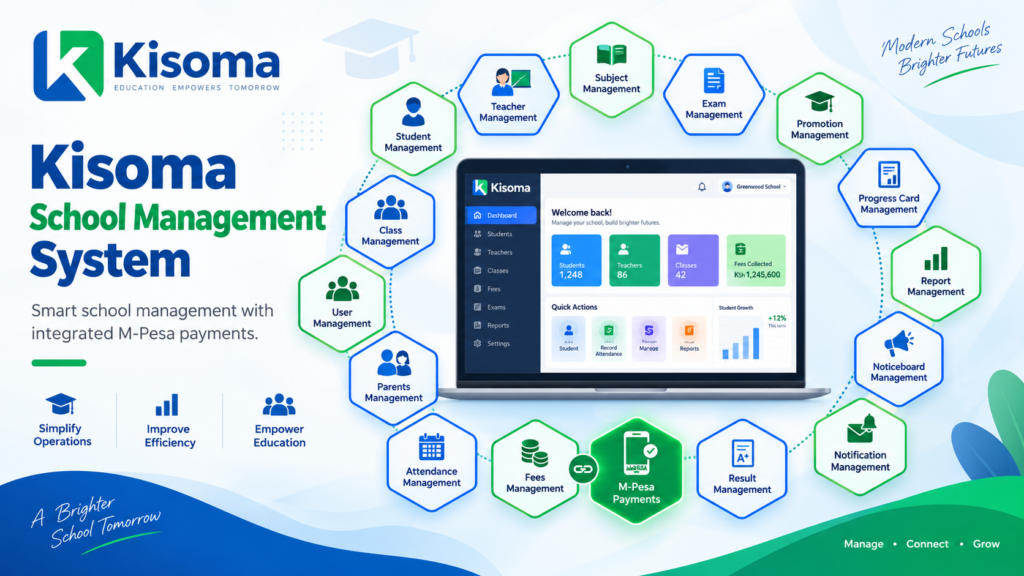
For schools looking to strengthen their digital learning capabilities, platforms such as Kisoma can help bring learning, communication and school services together in one digital environment.
3. Good Communication Between School and Parents
Education works best when teachers and parents work together.
Parents should look for schools that make it easy to receive important information about their child’s education.
This could include:
- Academic progress
- School announcements
- Attendance information
- Events and activities
- Teacher feedback
- Important notices
Good communication allows parents to become active participants in their child’s education rather than only hearing from the school when there is a problem.
Many Kenyan schools now use a school management system to share attendance, fee balances, results and announcements with parents from one place, instead of relying on scattered phone calls and paper circulars.
A strong connection between parents, teachers and schools can make it easier to identify challenges early and support learners effectively.
4. A Safe and Supportive Environment
A modern school should provide an environment where learners feel safe, respected and supported.
Parents should consider how a school handles:
- Student safety
- Bullying
- Discipline
- Child protection
- Emotional and social wellbeing
- Teacher-learner relationships
Children learn better when they feel comfortable asking questions, participating in activities and making mistakes as part of the learning process.
A good school should therefore focus on developing both academic ability and confidence.
5. Preparation for the Future
Perhaps the most important question parents should ask is:
How is this school preparing my child for the future?
The world learners will enter after school will require more than memorised knowledge.
Modern education should help learners develop skills such as:
- Critical thinking
- Creativity
- Communication
- Collaboration
- Problem-solving
- Digital literacy
- Adaptability
Schools can develop these skills through projects, practical activities, technology-based learning, teamwork and other experiences beyond traditional classroom instruction.
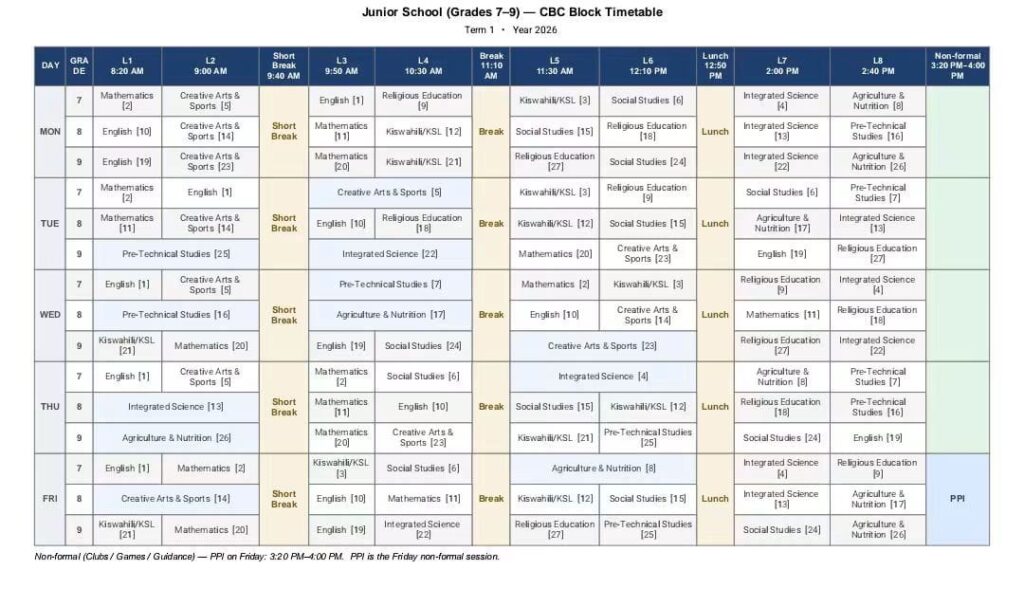
In Kenya, these skills sit at the heart of Competency Based Education (CBE). Parents can ask how a school organises its learning areas and weekly timetable. Our guide to CBE timetable guidelines for Pre-Primary to Grade 9 explains what the Ministry of Education expects at each level.
Parents should therefore look for schools that prepare learners not only for their next examination, but also for life beyond school.
The Right School Is About More Than Grades
Choosing a school shouldn’t be based on academic results alone.
The right school should provide a balanced learning environment where learners can develop academically, socially, creatively and digitally.
As education continues to evolve, schools that embrace technology while maintaining strong teaching, meaningful parent involvement and learner-focused education will be better positioned to prepare students for the future.
Parents should take time to visit schools, speak with teachers, ask questions and, where possible, talk to other parents before making their decision.
Ultimately, education is a partnership between learners, parents, teachers and schools.
Looking for a connected education experience?
Kisoma Connect is designed to bring schools, teachers and parents closer through technology, helping create a more connected education ecosystem. Try Kisoma free for one term.
Frequently Asked Questions
What is a modern school?
A modern school combines good teaching with meaningful use of technology, strong parent communication, a safe environment and a focus on future-ready skills. In Kenya, it also implements Competency Based Education (CBE) effectively rather than focusing only on examination results.
What should parents look for when choosing a school?
Parents should consider the quality of teaching, learning environment, use of technology, communication with parents, student safety and how well the school prepares learners for the future.
Why is technology important in modern schools?
Technology can support teachers, provide access to digital learning resources, improve communication and help learners develop important digital skills.
How important is communication between parents and schools?
Good communication helps parents stay informed about academic progress, attendance, activities and other aspects of their child’s education.
What makes a school future-ready?
A future-ready school develops both academic knowledge and skills such as critical thinking, creativity, collaboration, communication, problem-solving and digital literacy.
Should parents choose a school based only on academic results?
No. Academic performance is important, but parents should also consider the school’s learning environment, safety, teaching quality, technology, communication and overall development of learners.